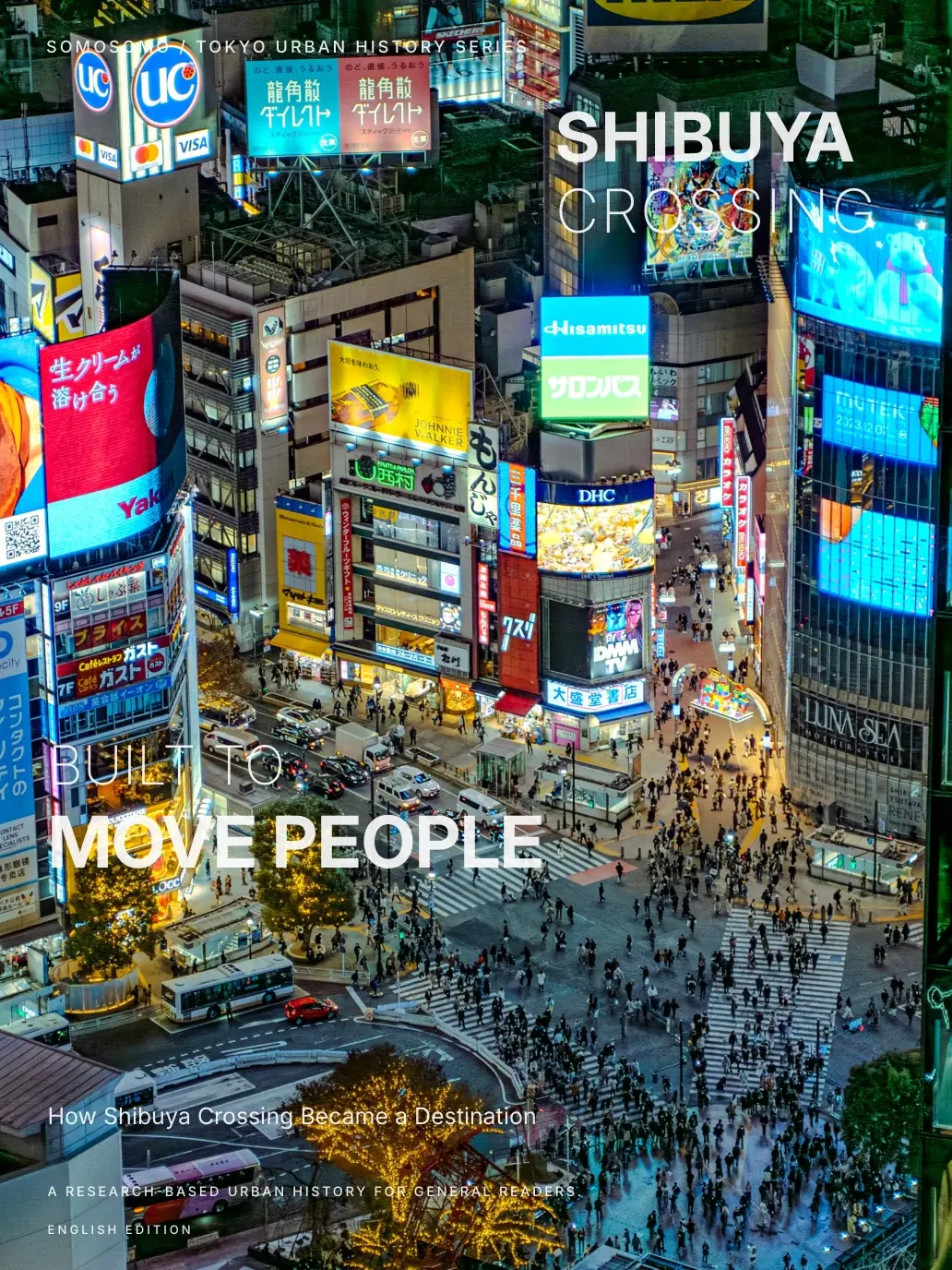
VOLUME 01 AVAILABLE NOW
Built to Move People: How Shibuya Crossing Became a Destination
How a 1973 traffic solution became an internationally recognizable place to visit and photograph.
58 pages · English PDF · $9.99
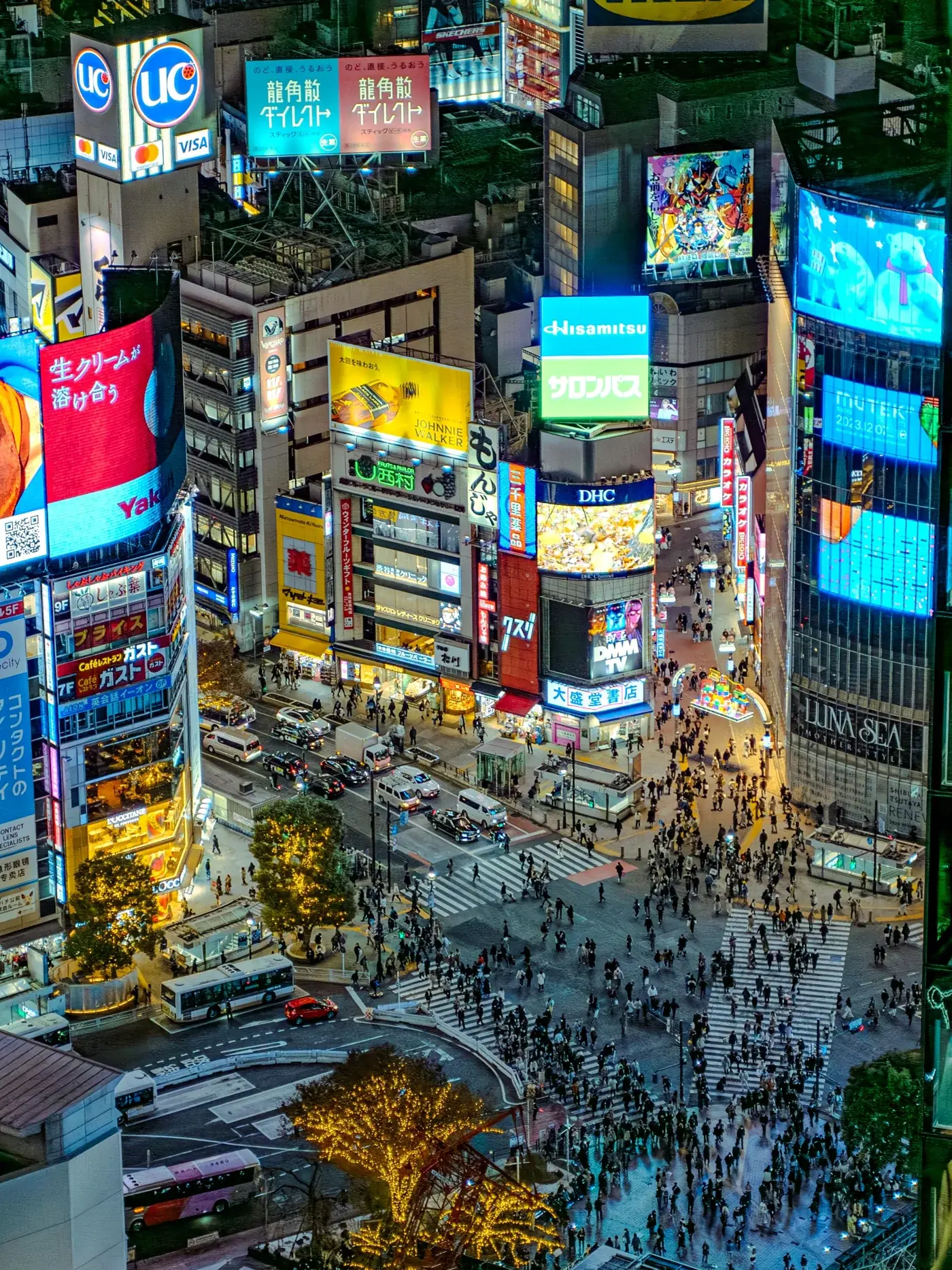
How Shibuya Crossing Became a Destination
In 1973, Shibuya's scramble crossing was a practical response to growing pedestrian traffic. By 2024, people were coming to a purpose-built photo spot just to watch it. This is the story of what changed in between.
TOKYO URBAN
HISTORY SERIES
A crossing. A station. A street. The places that make Tokyo recognizable have histories far longer than their most familiar photographs.
Each volume begins with one place and follows the people, plans, transport systems and everyday decisions that changed it. Historical maps, archival photographs, local records and published research are used to show how the city took shape.
Published in English by SOMOSOMO, the series is written for curious visitors and readers who want to understand the city beyond its landmarks.
Volume 1 is available now. Further volumes are in preparation. Details will be added as they are confirmed.
How a 1973 traffic solution became an internationally recognizable place to visit and photograph.
Details will be announced when available.
Details will be announced when available.
The question at the heart of the book
Millions of images show the stripes, the giant screens and the crowds moving in every direction. But the scramble crossing wasn't installed to create a spectacle.
The crossing began as traffic engineering. Over decades, railways, department stores, youth culture, media screens, gathering crowds and elevated viewing spots transformed the setting around it.
Built to Move People follows those changes through historical maps, local records, photographs, urban studies and the decisions that shaped Shibuya's streets.
The book follows a place whose purposes changed long before it became a tourist attraction. Four moments show the scale of the transformation.
An early map records the roads and river around what would become Shibuya Station. The modern crossing has a much older geography beneath it.
The station-front intersection adopts scramble control to handle increasing pedestrian traffic. The change is about moving people through a crowded junction.
Large video displays arrive in stages. The 1999 opening of QFRONT adds the enormous Q'S EYE screen to the now-familiar image of Shibuya.
SHIBUYA TSUTAYA's renovated Starbucks includes a designated place to photograph the crossing: a view of people doing what the signals tell them to do.
Old maps. Archival views. Photographs of a changing junction. Clear explanations with source notes. A close look at the evidence behind one of Tokyo's most recognizable places.
Select a page to enlarge it. Each preview is reproduced from the published PDF; printed page numbers differ from PDF page numbers.
Page-image sources: Edo Meisho Zue (1834) and Shibuya Miyamasu Konno hen zu (1851), Tokyo Metropolitan Library (public domain); 2002 Shibuya Crossing photograph, Guilhem Vellut / Wikimedia Commons (CC BY 2.0; cropped in the book).
Built to Move People: How Shibuya Crossing Became a Destination
For travelers who want to understand what they're seeing, Tokyo enthusiasts, and readers curious about how cities turn everyday infrastructure into famous places.
Shibuya has plenty of legends. This book works from documents and distinguishes what the sources show from what the author interprets.
Maps, local histories, city records, urban studies and a documented 1973 turning point — not an invented origin story.
Chapter notes and references let readers follow the record, including where the available evidence has limits.
Historical and contemporary images appear with individual credits, including archival material from Shibuya City used with permission.
It is an illustrated history written for general readers, rather than an itinerary or restaurant guide. You can read it before visiting Tokyo or after seeing Shibuya Crossing for yourself.
Seven pages: the cover, contents and the introduction. You can read it on Gumroad before deciding whether to buy the complete 58-page book.
It is an English-language digital PDF. Payment and file delivery take place through Gumroad. There is no physical printed edition listed here.
Yes. It covers the introduction of scramble control in 1973 as a response to rapidly increasing pedestrian traffic, then follows the district's later visual and cultural changes.
Built to Move People: How Shibuya Crossing Became a Destination · 58 pages · English PDF · $9.99